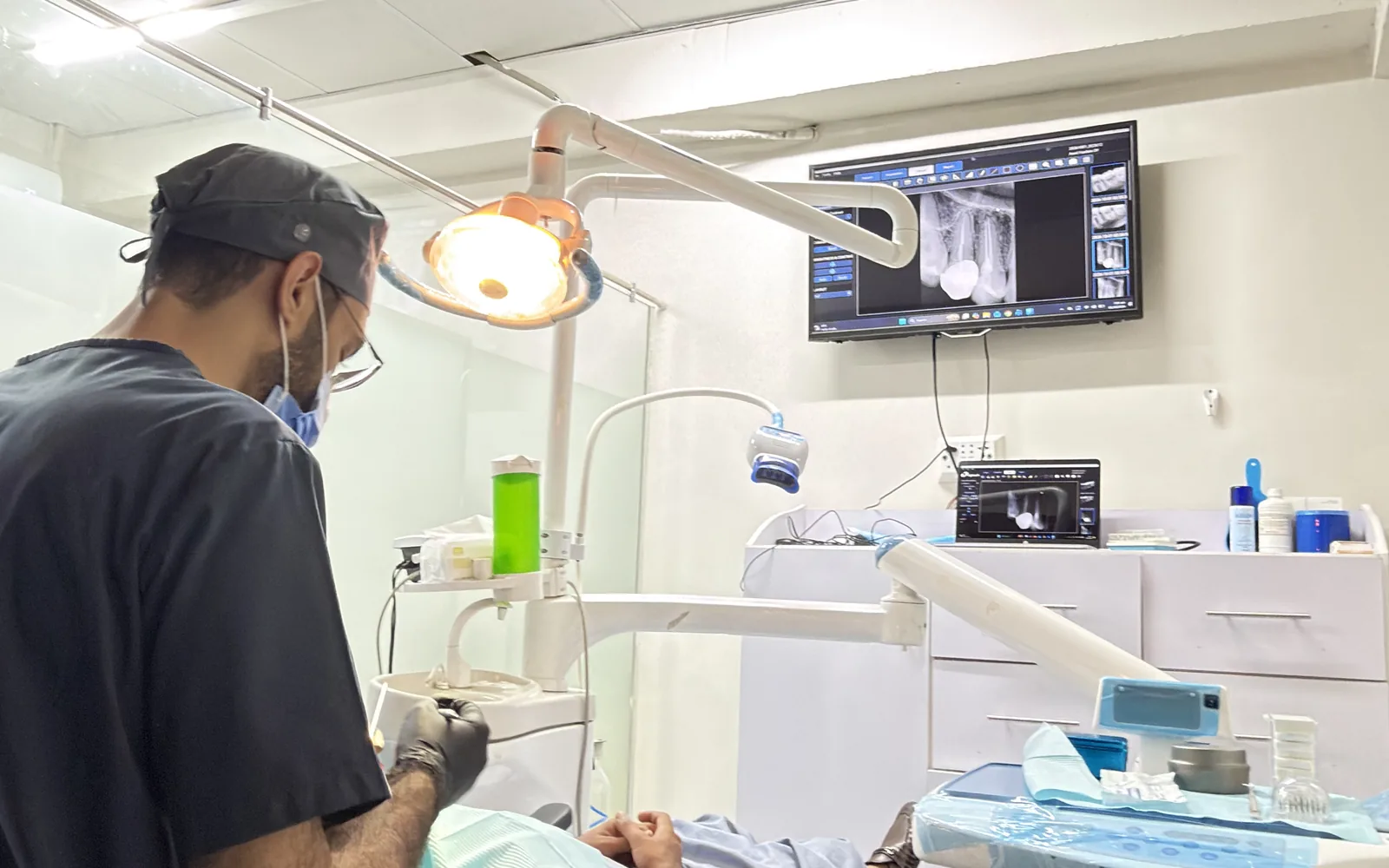
Dentist treating a patient in a treatment room at Dr Hashim & Associates, G-9 Markaz

Our services

Clear guidance.
Care for every stage.

Explore the clinic’s areas of care in straightforward language. Your dentist will confirm which options are appropriate after an individual assessment.

Areas of care

Eight services.
One considered approach.

Every treatment begins with a conversation about your needs, available options, and suitable next steps. Here is the path most people follow.

Prevent

Start with a healthy baseline.

Care for children

Pediatric Dentistry

Age-appropriate dental visits with clear explanations and a gentle pace.

Dental care designed for babies, children and teens, with a gentle approach that helps kids feel comfortable and builds good habits early.

When it’s recommended

From the first tooth or by the first birthday, then regular check-ups. Come sooner for pain, injury or concerns about thumb-sucking or crooked teeth.

What to expect

We keep things friendly and unhurried. We check teeth and growth, clean them and may apply fluoride or sealants. We also coach parents and kids on brushing and diet.

Aftercare

After fluoride or sealants, follow any short eating restrictions we give you. After fillings, watch that your child doesn’t chew their numb cheek or lip.

Common questions

When should my child first see a dentist?
By their first birthday or when the first tooth appears.
Do baby teeth really matter?
Yes. They hold space for adult teeth and affect eating and speech.
My child is scared. What can I do?
Keep it positive, avoid scary words and let us handle the explaining.
Are fluoride and sealants safe?
Yes, when used as directed and they significantly reduce cavities.
Typical visits
1 per check-up, every 6 months
Book
Gum treatment

Periodontics

Assessment and care for the gums and the tissues that support your teeth.

Periodontics treats the gums and the bone that support your teeth. It’s used for gum disease, which starts as inflammation and can lead to loose teeth if untreated.

When it’s recommended

If your gums bleed, look red or swollen, recede or you have persistent bad breath or loose teeth.

What to expect

We measure the pockets around your teeth, then deep-clean below the gumline (scaling and root planing). More advanced cases may need additional procedures.

Aftercare

Your gums may be tender for a few days. Use a soft brush, rinse gently as advised, and don’t skip follow-up cleanings, since maintenance is what keeps gum disease under control.

Common questions

Why do my gums bleed when I brush?
Usually it’s inflammation from plaque build up, a sign of gum disease rather than a reason to brush less.
Can gum disease be reversed?
Early-stage gingivitis can be. Advanced gum disease can be controlled but not fully reversed.
Does a deep cleaning hurt?
We numb the area, so most people feel pressure but not pain.
Typical visits
2–4, then ongoing maintenance every 3–4 months
Book

Diagnose

Understand before deciding.

Understanding your needs

Diagnostics

A careful assessment to understand your oral health and discuss suitable next steps.

Diagnostics is how we find out what’s going on in your mouth, often before you feel anything. It includes a full exam, X-rays, and screening for cavities, gum disease and oral cancer.

When it’s recommended

At least once or twice a year, when you’re a new patient, or any time you have pain, swelling, a chipped tooth or something that feels “off.”

What to expect

We review your health history, examine your teeth, gums and jaw. Then we take X-rays if needed and talk through what we see. You leave with a clear plan and priorities.

Aftercare

Nothing special. Keep brushing twice a day and flossing daily, and follow any treatment plan we give you.

Common questions

How often should I get a dental check-up?
Usually every 6 months, though some people need more frequent visits.
Are dental X-rays safe?
Yes. Modern digital X-rays use very low radiation and we only take them when they’re needed.
Does a check-up hurt?
No. It’s usually painless.
Typical visits
1 (repeated every 6–12 months)
Book

Treat

Resolve the immediate concern.

Root canal care

Endodontics

Care focused on the inside of a tooth when root canal treatment is appropriate.

A root canal treats an infected or badly damaged tooth from the inside. We remove the damaged nerve tissue, clean the space and seal it so you can keep your natural tooth.

When it’s recommended

When you have a severe toothache, lingering sensitivity to hot or cold, swelling or a deep cavity or crack that has reached the nerve.

What to expect

We numb the area, make a small opening, remove the infected tissue, clean and shape the canals and seal them. The tooth is then restored, usually with a filling or crown.

Aftercare

Mild soreness for a few days is normal and usually eases with over-the-counter pain relief. Avoid chewing on that side until the tooth is fully restored, and keep up your regular brushing and flossing.

Common questions

Does a root canal hurt?
With modern anesthesia, it feels similar to getting a filling. The treatment relieves the pain caused by the infection.
How long does a root canal take?
Usually 60–90 minutes per visit.
Can I go to work afterward?
Most people can.
Why not just pull the tooth?
Saving your natural tooth is generally better for your bite and jaw, and often cheaper in the long run than replacing it.
Typical visits
1–2, plus a follow-up for the crown
Book
Surgical dental care

Oral Surgery

Consultation and surgical care, including extractions when clinically appropriate.

Oral surgery covers procedures such as tooth extractions, wisdom tooth removal, and implant placement.

When it’s recommended

For teeth that can’t be saved, impacted wisdom teeth, or when a missing tooth is best replaced with an implant.

What to expect

We numb the area (or discuss sedation options), perform the procedure, and give you written aftercare instructions. Stitches may be placed.

Aftercare

Bite on gauze to control bleeding, apply a cold pack, stick to soft foods, and avoid straws, smoking, and vigorous rinsing for the first few days. Call us if you have heavy bleeding, fever, or pain that gets worse after day 3.

Common questions

Does getting a tooth pulled hurt?
You’ll feel pressure but no sharp pain during the procedure. Soreness afterward is manageable.
How long is recovery from wisdom teeth removal?
Most people feel better in 3–5 days, with full healing taking a few weeks.
What is dry socket?
A painful condition when the blood clot is dislodged. Following aftercare instructions greatly lowers the risk.
Typical visits
1–2 for extractions; implants take several visits over a few months
Book

Restore

Rebuild strength and function.

Restoring comfort

Restorative Dentistry

Individual care for damaged or missing teeth, explained clearly and planned with you.

Treatments that repair damaged or missing teeth, including fillings, crowns, bridges, and dentures, restoring both function and appearance.

When it’s recommended

For cavities, cracked or broken teeth, worn teeth, or when teeth are missing.

What to expect

We remove decay or damage and rebuild the tooth with a filling or crown. For crowns and bridges, we usually take impressions or scans, place a temporary, then fit the final restoration.

Aftercare

Avoid chewing until numbness wears off. Mild sensitivity is normal for a few days. Avoid very hard or sticky foods on a new restoration, and keep brushing and flossing.

Common questions

Does getting a filling hurt?
We numb the area, so it shouldn’t.
How long does a crown last?
Often 10–15 years or longer with good care.
Filling or crown?
Fillings suit smaller damage, while crowns protect larger or weakened teeth.
What are my options for a missing tooth?
Implants, bridges, or dentures, and we’ll help you choose.
Typical visits
1 for a filling; 2 for a crown or bridge
Book

Refine

Shape the smile you see first.

Braces and aligners

Orthodontics

Options for improving tooth alignment and bite for children, teens, and adults.

Orthodontics straightens teeth and corrects bite problems using braces or clear aligners, for better function, easier cleaning, and a confident smile.

When it’s recommended

For crowding, gaps, overbites, underbites or crooked teeth, in both teens and adults.

What to expect

We take photos, X-rays, and impressions or scans, then plan your treatment. Regular adjustment visits follow, usually every 4–8 weeks.

Aftercare

Brush and floss carefully around braces or aligners, avoid hard and sticky foods, and wear retainers as instructed once treatment ends. Retainers keep teeth from shifting back.

Common questions

How long do braces take?
Typically 12–24 months, depending on the case.
Do braces hurt?
There’s mild soreness after adjustments, usually for a few days.
Am I too old for braces?
No. Many adults get treated.
Braces or clear aligners?
It depends on your case. We’ll recommend the best fit for you.
Typical visits
Consultation, then regular visits every 4–8 weeks over 1–2 years
Book
Smile-focused care

Cosmetic Dentistry

Thoughtful options to discuss the shade, shape, and appearance of your smile.

Treatments that improve the look of your smile, such as whitening, bonding, veneers and reshaping.

When it’s recommended

If you’re unhappy with stained, chipped, gapped or uneven teeth and want a more confident smile.

What to expect

We discuss your goals, then design a plan, sometimes with a preview of the result. Treatments range from a one-visit whitening to multi-visit veneers.

Aftercare

After whitening, you may have temporary sensitivity, so avoid dark-colored foods and drinks for a couple of days. For veneers and bonding, avoid biting hard objects and keep up regular cleanings.

Common questions

Is teeth whitening safe?
Yes, when supervised by a dentist. It doesn’t damage enamel.
How long do veneers last?
Often 10–15 years with good care.
Does whitening cause sensitivity?
Sometimes, temporarily.
How much does it cost?
It depends on the treatment, so we’ll give you a clear quote after your consultation.
Typical visits
1–3 for whitening or bonding; 2–3 for veneers
Book

Discuss your care

Start with an
assessment.

Treatment availability and suitability are confirmed during your consultation.

Book an Appointment
WhatsApp