
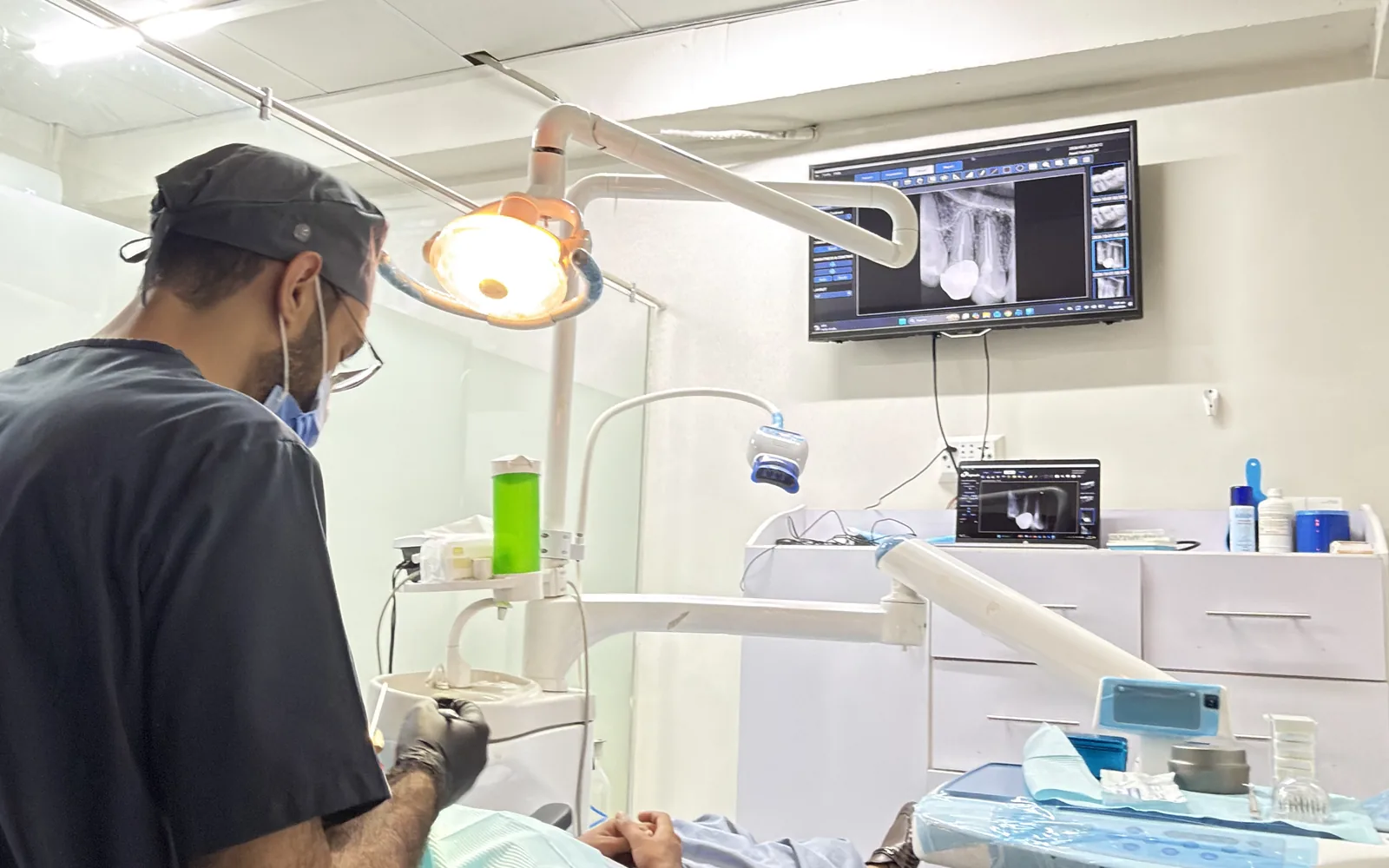
Rebuilding damaged teeth
Crowns and Bridges
Caps and fixed replacements that protect a weak tooth or close a gap.
Crowns and Bridges — treatment details
A crown covers a weakened or heavily repaired tooth to protect it. A bridge fills a gap by anchoring a replacement tooth to crowns on the teeth either side.
When it’s recommended
When a tooth is too broken down for a filling, after root canal treatment, or when teeth are missing and the neighbouring teeth need crowns anyway.
What to expect
We prepare the tooth, take an impression or a scan, and fit a temporary while the final restoration is made. At the next visit it is checked and cemented.
Aftercare
Avoid chewing until the numbness wears off. Mild sensitivity for a few days is normal. Clean carefully around the margin, and underneath a bridge — it cannot be removed, so that area needs a little more care than a natural tooth.
Common questions
How long does a crown last?
Often ten to fifteen years or longer with good care and regular check-ups.
Will it look like my other teeth?
Crowns are made to match the shade and shape of your other teeth. We discuss the appearance before the tooth is prepared.
Does it hurt?
The tooth is numbed while it is prepared, so the appointment itself is not painful. Some sensitivity afterwards is normal.
Why is a temporary crown needed?
It protects the prepared tooth while the final one is being made, and keeps it from moving.
- Typical visits
- 2
Related care
Other treatments
at the clinic.
- FillingsTreating decay · Removal of decay and rebuilding of the tooth with a filling.
- DenturesReplacing missing teeth · Removable replacements for some or all of the teeth in an arch.
Part of Restorative Dentistry
Discuss your care
Start with an
assessment.
Treatment availability and suitability are confirmed during your consultation.
Book an Appointment