
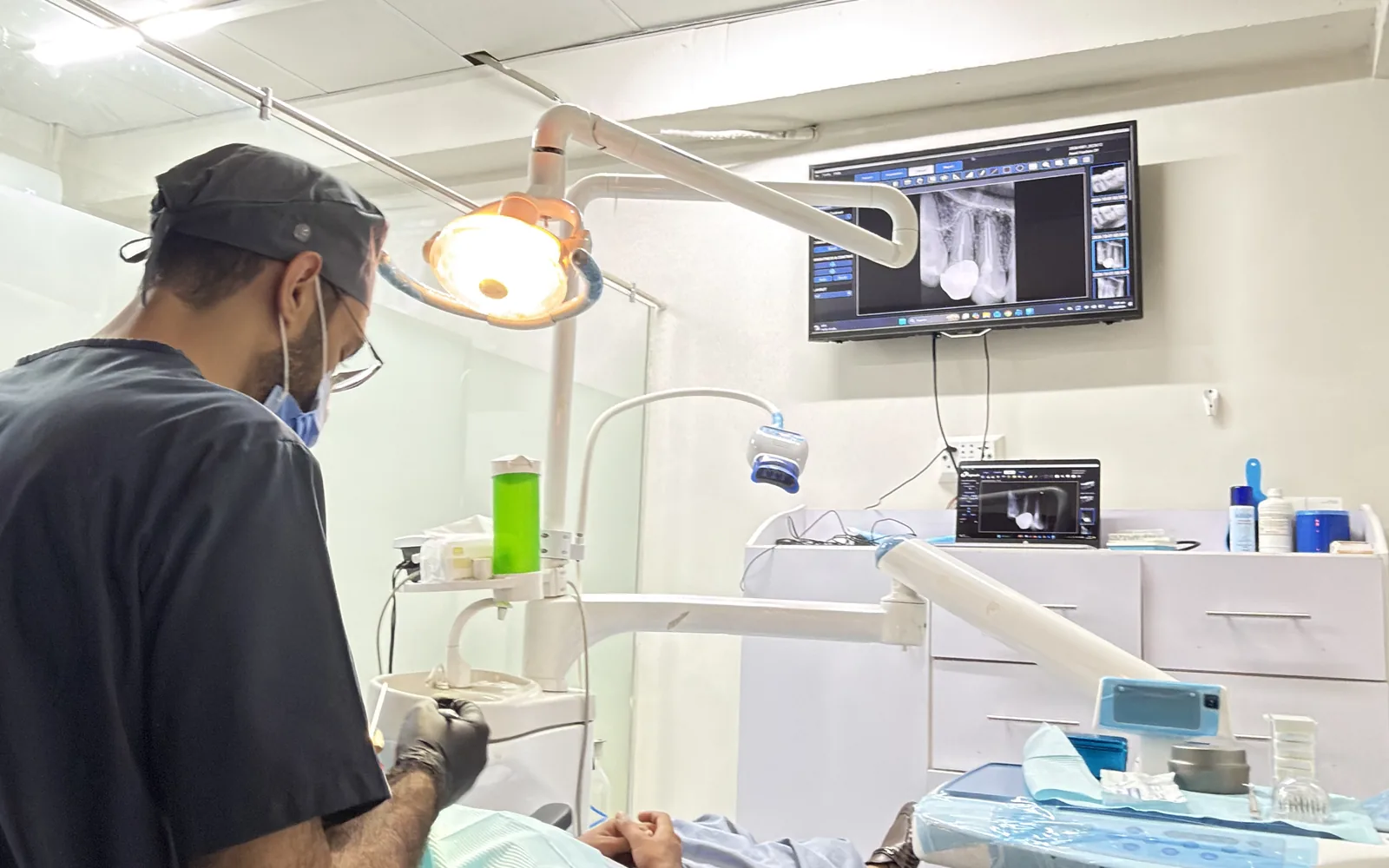
Treating decay
Fillings
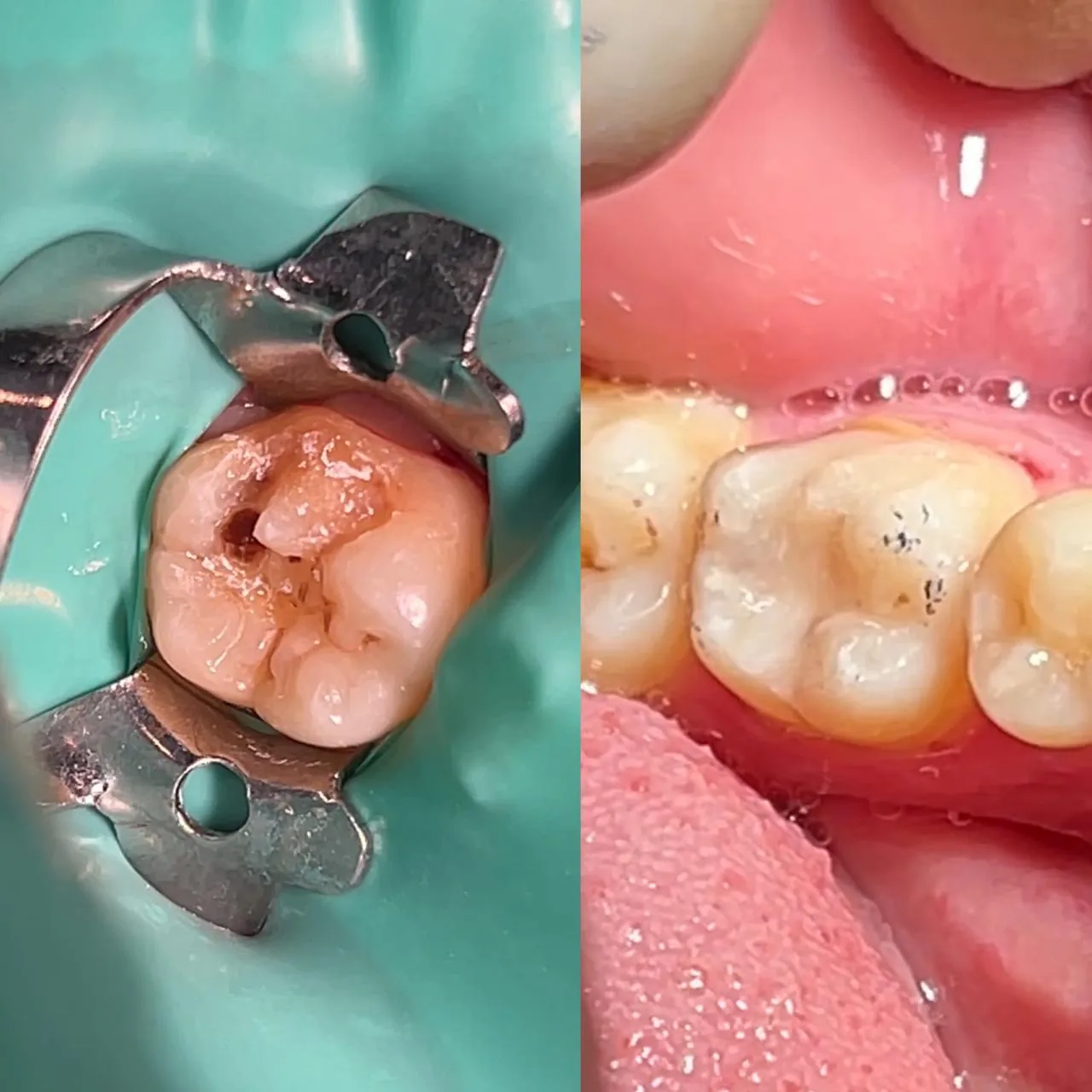
Removal of decay and rebuilding of the tooth with a filling.
Fillings — treatment details
A filling removes decay from a tooth and rebuilds the missing part, so the tooth can be used normally again. It is the usual treatment for a cavity that has not reached the nerve.
When it’s recommended
When a tooth has a cavity, a small chip, or wear that has reached the inner layer — or when an old filling has broken down.
What to expect
We numb the tooth, remove the decayed tissue, shape the cavity and place the filling, then check your bite. Most fillings are finished in one visit.
Aftercare
Avoid chewing on that side until the numbness wears off, since you could bite your cheek or tongue without noticing. Mild sensitivity to hot and cold for a few days is normal.
Common questions
Does getting a filling hurt?
The tooth is numbed first, so it should not be painful. You may feel vibration and pressure.
Filling or crown?
Fillings suit smaller areas of damage. Crowns protect teeth that are more extensively broken down or weakened.
How long does a filling last?
Several years for most, depending on the size of the filling, the tooth and how well it is looked after.
Can I eat afterwards?
Wait until the numbness has gone, then start with softer food and avoid very hot or cold items for a day.
- Typical visits
- 1
Related care
Other treatments
at the clinic.
- Crowns and BridgesRebuilding damaged teeth · Caps and fixed replacements that protect a weak tooth or close a gap.
- DenturesReplacing missing teeth · Removable replacements for some or all of the teeth in an arch.
Part of Restorative Dentistry
Discuss your care
Start with an
assessment.
Treatment availability and suitability are confirmed during your consultation.
Book an Appointment